Agentic Commerce
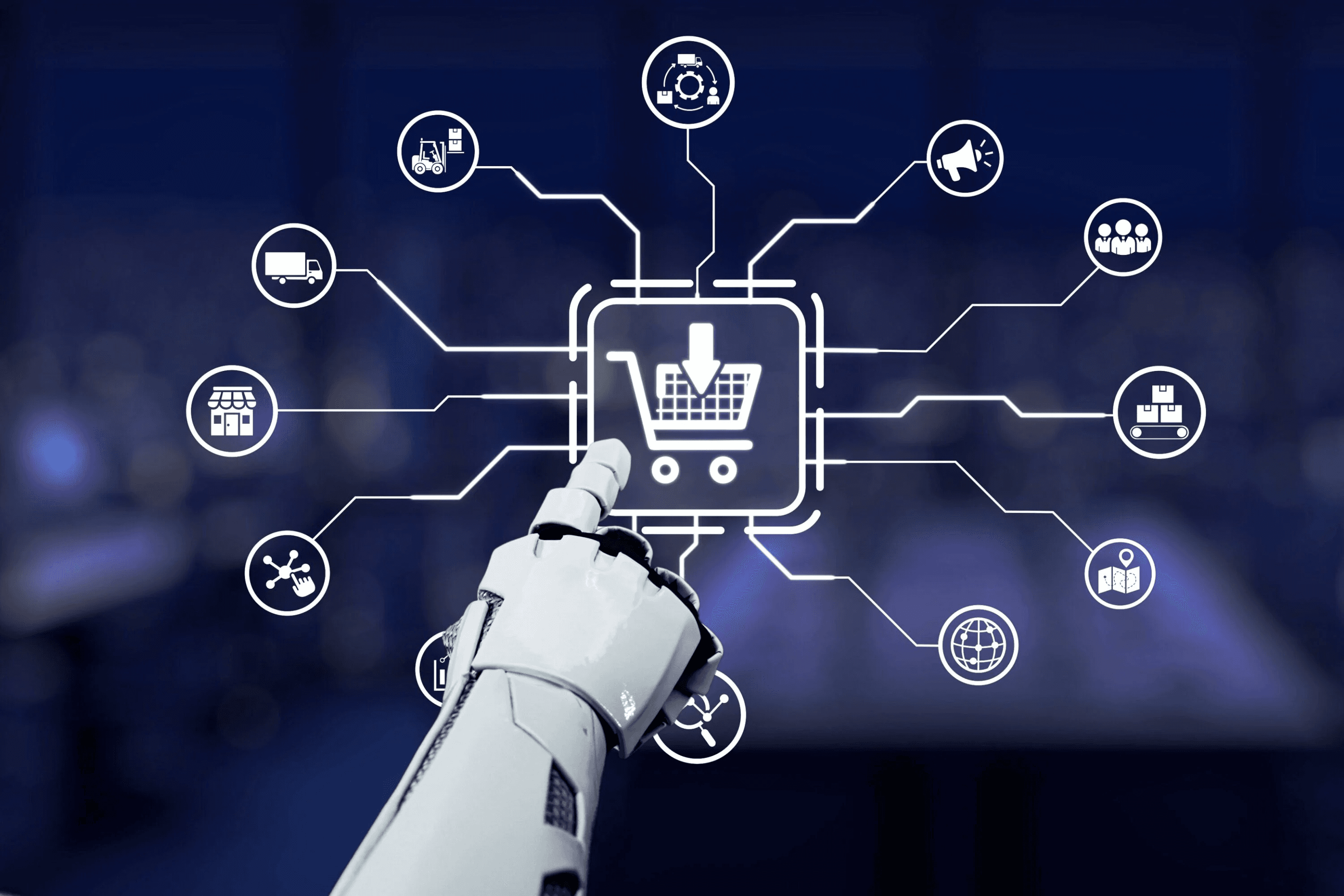
For years, eCommerce strategy has centered on the storefront. Brands optimized landing pages, product detail pages, collection pages, and checkout flows because that was where discovery and conversion happened. In 2026, that model is starting to shift.
Agentic commerce is the move from shoppers simply using AI for research to AI systems actively helping evaluate options, narrow choices, and in some cases complete purchases. McKinsey describes this as a progression from assisted shopping to higher-autonomy commerce, where AI agents increasingly mediate how decisions get made.
This matters because the path to purchase is no longer guaranteed to begin on your homepage. It may begin inside an AI conversation.
That shift is becoming real infrastructure, not just theory. OpenAI has launched shopping capabilities in ChatGPT with Instant Checkout for eligible experiences, allowing shoppers to move from discovery to purchase inside chat. At the same time, Google and Shopify have introduced the Universal Commerce Protocol, an open standard designed to help AI systems understand merchant capabilities, product data, and transaction flows across commerce environments.
In practical terms, this means brands need to think beyond “Is our site beautiful?” and start asking “Is our business understandable to machines?”
That includes product data, pricing, inventory, shipping windows, return policies, and brand trust signals. Google’s commerce guidance makes clear that structured product data and Merchant Center feeds improve eligibility and help verify critical details like price and availability. In an agentic environment, those are not just SEO enhancements. They are part of whether an AI system can confidently recommend you at all.
There is also evidence that AI is becoming a meaningful discovery channel. Adobe reported that traffic from generative AI sources to U.S. retail sites rose 693.4% year over year during the 2025 holiday season, alongside record online spending. That does not mean AI has replaced search, email, paid media, or direct traffic. It does mean brands should stop treating AI-driven shopping behavior like an edge case.
The operational implications are even bigger than the channel implications.
If AI agents are part of the shopping journey, then catalog hygiene becomes a growth lever. If your taxonomy is messy, your variant logic is inconsistent, or your product benefits are vague, you are harder for both humans and machines to understand. If your shipping and return policies are hard to parse, you create friction before a shopper ever lands on site. If your trust signals are thin, an AI system may have less confidence surfacing your product in a recommendation set.
This is where the next phase of eCommerce gets interesting. The competitive edge may not come from who has the flashiest storefront. It may come from who has the clearest data, the strongest product architecture, and the best ability to make their brand legible across human and machine-led touchpoints.
That lines up naturally with how Convert Via already positions its work. Your site emphasizes web development, retention marketing, and conversion-focused execution, especially across Shopify and lifecycle platforms like Klaviyo, Attentive, Omnisend, and Postscript. That matters here because agentic commerce is not just a top-of-funnel topic. It touches site structure, product merchandising, retention flows, and how clearly your value proposition carries from first interaction to post-purchase.
For brands on Shopify in particular, this is the right time to think about agent readiness as a real workstream. Shopify is already positioning itself inside this new commerce layer through UCP and broader AI commerce initiatives. Brands that get ahead now can build for discoverability, confidence, and conversion before AI-mediated shopping becomes a standard consumer behavior.
The takeaway is simple: agentic commerce does not mean your storefront disappears. It means your storefront is no longer the only place where commerce begins.
The brands that win will be the ones that treat AI not as a novelty, but as a new interface layer for product discovery, brand evaluation, and transaction flow. In 2026, being conversion-ready also means being machine-readable.
Recent Post