AI Shopping
AI in eCommerce is rapidly evolving beyond content generation.
The newest shift happening across the industry is operational AI: systems that can connect directly to your business data and help teams make decisions faster.
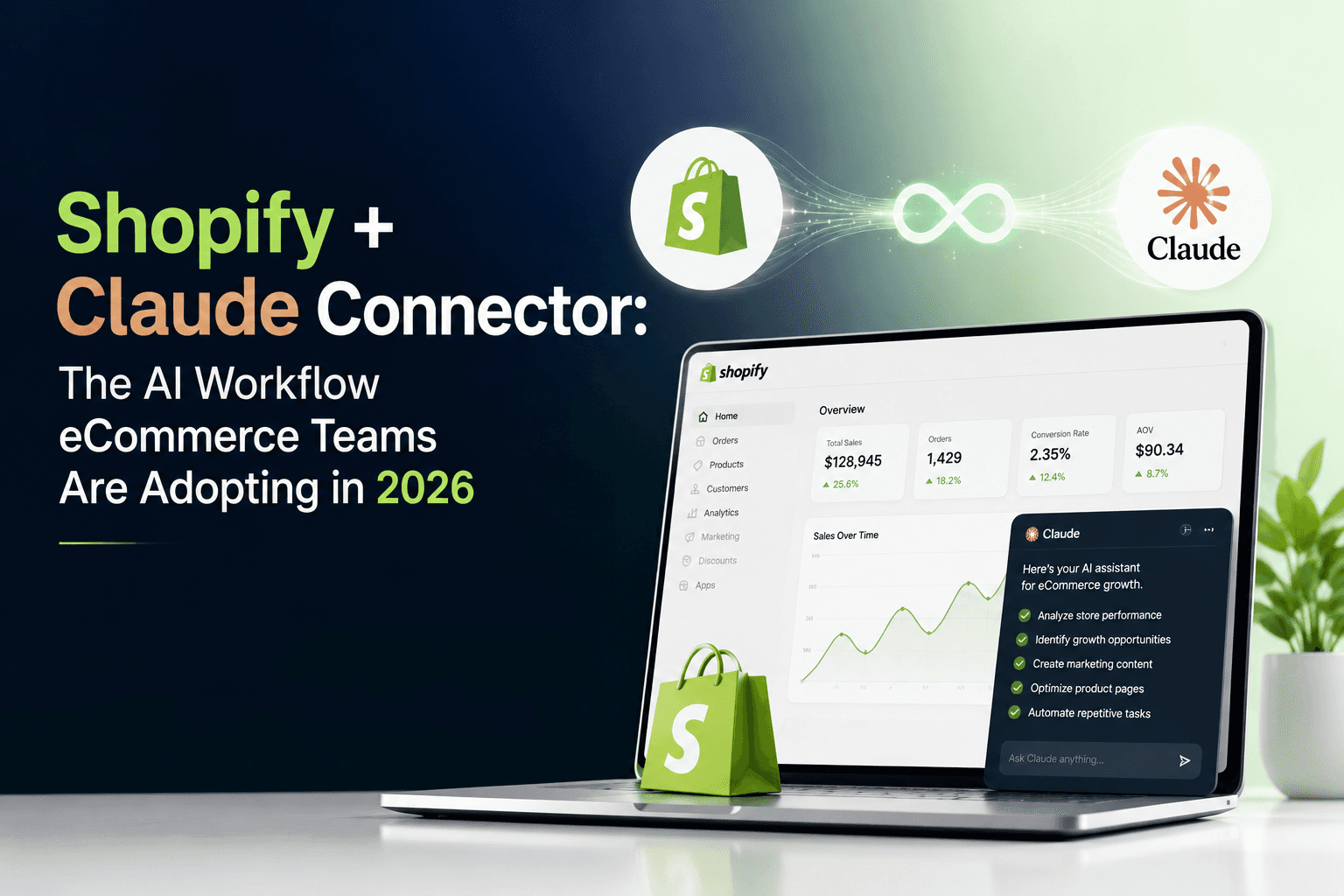
One of the biggest emerging trends right now is the Shopify + Claude Connector workflow.
Brands, agencies, and operators are beginning to connect Shopify store data directly into Claude AI using APIs, MCP servers, custom Shopify apps, and middleware tools. Instead of pulling reports manually or bouncing between dashboards, teams can now ask questions conversationally and receive immediate insights.
For growing eCommerce brands, this is becoming a major operational advantage.
What Is a Shopify + Claude Connector?
A Shopify + Claude Connector is a workflow that gives Claude access to Shopify store data.
This allows teams to:
Analyze sales performance
Review product trends
Surface merchandising insights
Audit customer behavior
Generate reports instantly
Identify operational issues faster
Automate recurring reporting workflows
Ask business questions in plain English
Instead of exporting spreadsheets or building dashboards manually, teams can ask questions like:
“Which products had the highest conversion increase this week?”
“What returning customer segment has the highest AOV?”
“Which collection is underperforming compared to last month?”
“What products are driving the most repeat purchases?”
Claude can process the data and deliver answers within seconds.
Why This Trend Matters
Most brands already have access to data.
The problem is that too much of it lives in disconnected systems.
Marketing is in one platform. Analytics are in another. Email data lives somewhere else. Inventory reporting exists in a separate dashboard.
The Shopify + Claude Connector trend is important because it creates a centralized AI workflow layer that helps teams move faster.
Instead of spending hours building reports, operators can focus on:
Strategy
Merchandising
Campaign optimization
Customer retention
Revenue growth
The brands adopting these systems early are gaining operational speed that traditional workflows simply cannot match.
How eCommerce Teams Are Using It
Faster Reporting
Teams are using AI-connected Shopify workflows to automate:
Weekly KPI reporting
Revenue summaries
Campaign recaps
Inventory alerts
Product performance reviews
Executive summaries
Smarter Merchandising
Claude can quickly identify:
Products with high traffic but low conversion
Fast-moving inventory
Product bundling opportunities
Underperforming collections
Seasonal demand trends
Better Marketing Decisions
Marketing teams are using these workflows to:
Identify high-converting products
Analyze retention trends
Spot discount dependency
Review audience performance
Improve campaign timing
Cross-Platform Analysis
Many teams are connecting Shopify alongside:
GA4
Klaviyo
Meta Ads
Google Sheets
Inventory systems
CRM platforms
This gives operators a centralized AI-powered business intelligence layer.
Why Agencies Are Paying Attention
Agencies are increasingly building custom AI workflows for clients because it allows them to:
Deliver faster reporting
Provide proactive recommendations
Reduce manual work
Create operational efficiencies
Improve client communication
The shift is moving agencies from execution partners into strategic operational partners.
Final Thoughts
The Shopify + Claude Connector trend represents one of the most important shifts currently happening in eCommerce operations.
AI is no longer just helping brands create content.
It’s helping them run their businesses faster.
Brands that adopt AI-connected workflows early will likely have major advantages in:
Operational speed
Reporting efficiency
Marketing optimization
Merchandising strategy
Customer retention
Data accessibility
The future of eCommerce belongs to brands that can move quickly, make smarter decisions, and turn data into action faster than their competitors.
And AI-connected workflows are becoming one of the biggest tools enabling that shift.
Recent Post